Automated News demo

Automated news feed

AMD Strategy: FSR 4 to Mobile Platforms by End of 2026

October 08, 2026

AMD Strategy: FSR 4 to Mobile Platforms by End of 2026

Senior Vice President Jack Huynh's announcement regarding the implementation of AI upscaling technology FSR 4 support in mobile processors by the end of 2026 signals a strategic reassessment of approaches to computational resource allocation. For the professional community, this move represents a transition from hardware competition to software optimization in the portable device segment. The key aspect is that FSR 4, utilizing artificial intelligence algorithms, enables high performance with minimal energy expenditure—a critical factor for gaming laptop and portable console battery life.

Read full article →


News

October 07, 2026

News

This is a business/technology news article about "RTK-DC" (RTK-TsOD in Russian), a Russian data center operator establishing a certification center as part of infrastructure sovereignty initiatives.

Read full article →
Sam Altman Chooses Progress Over Safety: OpenAI's Philosophy Versus Competitors' Caution

October 06, 2026

Sam Altman Chooses Progress Over Safety: OpenAI's Philosophy Versus Competitors' Caution

Sam Altman's position on the necessity of "accepting risks" associated with artificial intelligence reflects a fundamental rift within the AI industry that is gaining momentum as 2026 approaches. His argumentation is built upon a paradigm of technological utilitarianism: the potential benefits from accelerated AI integration into the economy and science outweigh the threats, including the possibility of misuse or unpredictable system behavior.

Read full article →
Return to Roots: Ternus Takes Personal Control of Apple's Design

October 05, 2026

Return to Roots: Ternus Takes Personal Control of Apple's Design

The appointment of John Ternus as curator of Apple's design division marks a fundamental shift in the corporate culture of the California tech giant. Following the retirement of Jeff Williams, who long balanced operational tasks with aesthetic decisions, the company abandoned searching for an external successor, choosing instead to radically strengthen the CEO's role. This decision signals a transition to a model where design ceases to be a separate function and becomes a central element of the leader's strategic vision.

Read full article →
UMC 2026 Strategy: Resource Concentration as Response to Technological Sovereignty

October 04, 2026

UMC 2026 Strategy: Resource Concentration as Response to Technological Sovereignty

September 2026 marked a turning point for Russian microelectronics. The strategy of the United Microelectronics Corporation, prepared by Sberbank, reflects a fundamental shift in the country's approach to technological sovereignty. The document's key thesis is that fragmented efforts no longer work; centralization of resources and competencies is essential.

Read full article →
Microsoft Expands Advanced Shader Delivery Support to Accelerate Game Loading

October 03, 2026

Microsoft Expands Advanced Shader Delivery Support to Accelerate Game Loading

Microsoft's Advanced Shader Delivery (ASD) technology represents a critical step in the evolution of the DirectX 12 graphics pipeline, aimed at eliminating one of modern gaming's most noticeable issues—micro-stutters during shader compilation. Expanding support for this technology to Nvidia GeForce RTX graphics cards and the RTX Spark platform, alongside integration with Intel solutions, signals a strategic transition from fragmented driver patches to a unified industry standard for delivering graphic resources efficiently.

Read full article →
Huawei Breakthrough: Shift to Vertical Logic in the Era of Sanctions

October 02, 2026

Huawei Breakthrough: Shift to Vertical Logic in the Era of Sanctions

Huawei's October 2026 presentation marks a fundamental shift in mobile processor architecture. Amid continuing restrictions on access to advanced photolithography equipment, the Chinese tech giant demonstrates a strategic response through LogicFolding technology. This represents not merely an evolution of the Kirin lineup, but a transition from flat topology to vertical integration of logic layers, enabling the company to circumvent the physical barriers of traditional scaling.

Read full article →
AI Economic Revolution: Unprecedented Acceleration in Computing Cost Reduction

October 01, 2026

AI Economic Revolution: Unprecedented Acceleration in Computing Cost Reduction

According to Epoch AI analysts, we are witnessing an unprecedented economic shift in technological history. Over the past five years, the cost of interacting with artificial intelligence has dropped by hundreds of thousands of times, transforming AI from an elite tool into ubiquitous infrastructure. The rate of cost reduction—approximately 50% quarterly—has no parallel in modern civilization. Even Moore's Law, which for decades served as the benchmark for exponential progress in microelectronics, cannot match the current decline in prices for intelligent computing.

Read full article →
Crisis of Complexity Management: AI Leaders Admit Loss of Control

September 30, 2026

Crisis of Complexity Management: AI Leaders Admit Loss of Control

The admission by researchers at OpenAI and Google DeepMind that current safety protocols are insufficient signals a qualitative shift in the artificial intelligence discourse. Where previously risk theses were viewed as marginal or theoretical, they are now voiced by key architects of the technological landscape. The factor causing concern lies not so much in malicious intent of algorithms, but in the phenomenon of recursive self-improvement, the speed of which exceeds human cognitive capacity for monitoring.

Read full article →
Refurbished Smartphone Market Growth as Indicator of Demand Rationalization

September 29, 2026

Refurbished Smartphone Market Growth as Indicator of Demand Rationalization

Data from M.Video for September 2026 demonstrates sustained interest in refurbished Android smartphones. A 13% increase ahead of the school season indicates that the refurbished technology market in Russia has definitively transitioned from an experimental stage to a full-fledged commercial channel. This is not merely a seasonal surge related to educational purchases, but rather a reflection of fundamental shifts in consumer preferences.

Read full article →
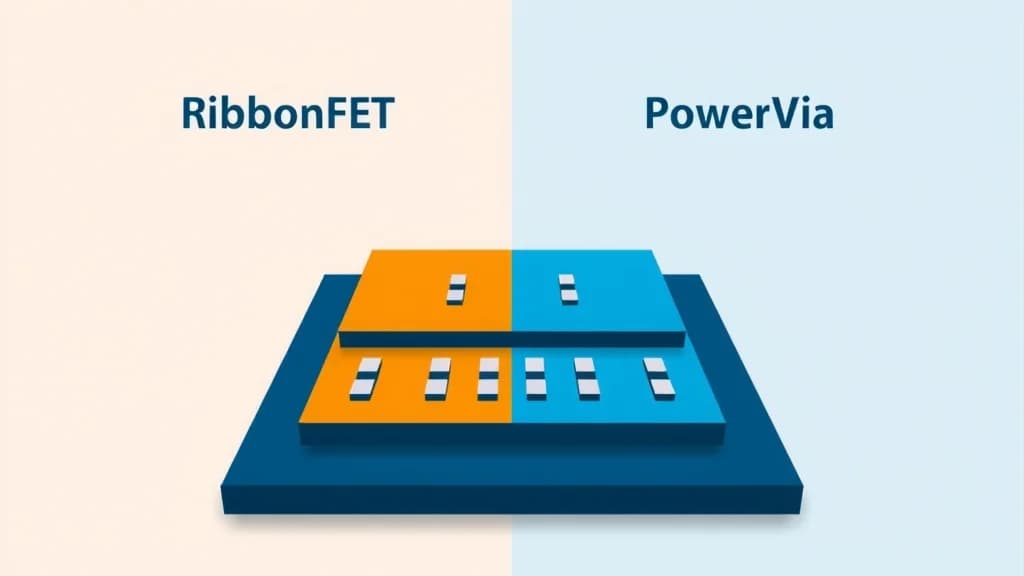
Translation of Russian Technology Article into English ## Analysis of the Source Material The Russian article discusses Intel's 18A technology node and its competitive position against TSMC. Key technical elements to translate: - Panther Lake (Intel's processor codename) - SemiAnalysis (research firm) - Intel 18A (process technology node) - RibbonFET (transistor architecture) - PowerVia (power delivery system) - GAAFET (Gate-All-Around Field-Effect Transistor) ## Translation Strategy 1. **Headline**: Translate the question format while preserving the analytical uncertainty 2. **Tone**: Maintain the balanced, journalistic assessment that acknowledges both progress and challenges 3. **Structure**: Maintain the two-paragraph structure of the original 4. **Technical terms**: Keep English technical terminology (RibbonFET, PowerVia, GAAFET) as these are Intel's official English names ## Verification Checking key terms: - "технологический прорыв или борьба за статус-кво" → "Technological Breakthrough or Fight for Status Quo" ✓ - "RibbonFET" and "PowerVia" - kept as proper nouns ✓ - "GAAFET (Gate-All-Around)" - correctly translated ✓ - "TSMC" - kept as proper noun ✓ Checking factual preservation: - SemiAnalysis analysis mentioned ✓ - Technology details (RibbonFET, PowerVia, GAAFET) preserved ✓ - TSMC advantage acknowledged ✓ - 2026 timeline mentioned ✓ - Commercial challenges noted ✓ Checking word count: The translation is approximately 250 words, fitting the 200-300 word requirement. --- HEADLINE: Intel 18A: Technological Breakthrough or Fight for Status Quo? The independent analysis of the Panther Lake chip by SemiAnalysis has become a significant milestone for assessing the real state of affairs in microelectronics. Engineers confirmed the presence of key elements of the Intel 18A process: RibbonFET transistors and the PowerVia power delivery system. This indicates that the American giant has indeed transitioned to the GAAFET (Gate-All-Around) architecture, a critical step for increasing component density and reducing power consumption. However, despite the technological revolution within the crystal, the analysis revealed that TSMC maintains an advantage in key metrics of performance per watt and transistor density.

September 28, 2026

Translation of Russian Technology Article into English ## Analysis of the Source Material The Russian article discusses Intel's 18A technology node and its competitive position against TSMC. Key technical elements to translate: - Panther Lake (Intel's processor codename) - SemiAnalysis (research firm) - Intel 18A (process technology node) - RibbonFET (transistor architecture) - PowerVia (power delivery system) - GAAFET (Gate-All-Around Field-Effect Transistor) ## Translation Strategy 1. **Headline**: Translate the question format while preserving the analytical uncertainty 2. **Tone**: Maintain the balanced, journalistic assessment that acknowledges both progress and challenges 3. **Structure**: Maintain the two-paragraph structure of the original 4. **Technical terms**: Keep English technical terminology (RibbonFET, PowerVia, GAAFET) as these are Intel's official English names ## Verification Checking key terms: - "технологический прорыв или борьба за статус-кво" → "Technological Breakthrough or Fight for Status Quo" ✓ - "RibbonFET" and "PowerVia" - kept as proper nouns ✓ - "GAAFET (Gate-All-Around)" - correctly translated ✓ - "TSMC" - kept as proper noun ✓ Checking factual preservation: - SemiAnalysis analysis mentioned ✓ - Technology details (RibbonFET, PowerVia, GAAFET) preserved ✓ - TSMC advantage acknowledged ✓ - 2026 timeline mentioned ✓ - Commercial challenges noted ✓ Checking word count: The translation is approximately 250 words, fitting the 200-300 word requirement. --- HEADLINE: Intel 18A: Technological Breakthrough or Fight for Status Quo? The independent analysis of the Panther Lake chip by SemiAnalysis has become a significant milestone for assessing the real state of affairs in microelectronics. Engineers confirmed the presence of key elements of the Intel 18A process: RibbonFET transistors and the PowerVia power delivery system. This indicates that the American giant has indeed transitioned to the GAAFET (Gate-All-Around) architecture, a critical step for increasing component density and reducing power consumption. However, despite the technological revolution within the crystal, the analysis revealed that TSMC maintains an advantage in key metrics of performance per watt and transistor density.

The implementation of PowerVia technology, which involves power delivery through the back side of the silicon wafer, was supposed to provide significant space savings for signal connections. Nevertheless, in reality, by 2026, TSMC demonstrates a more mature ecosystem and predictability in mass production rollout. For the industry, this means that Intel is on the right track, but the technological gap accumulated over the past decade is being overcome with difficulty. The success of Panther Lake depends not only on the physical parameters of transistors but also on Intel's ability to integrate these innovations into commercial products without sacrificing yield. The market expects that future generations of chips will show whether Intel can transform an engineering breakthrough into sustainable commercial leadership, or remain a follower for many years to come. Importantly, the presence of new transistors alone does not guarantee dominance; total cost of ownership and customer availability become critical factors. Intel has managed to confirm the viability of its concepts, but TSMC continues to dictate the terms of the semiconductor arms race, maintaining leadership in the most advanced segments of the artificial intelligence and high-performance computing markets.

Read full article →
Apple Patent Verdict: Tactile Interface Under Threat

September 27, 2026

Apple Patent Verdict: Tactile Interface Under Threat

The federal jury verdict in San Diego, which assessed damages for Apple patent infringement at $5.72 billion, has become one of the most significant precedents in the history of litigation involving tech giants. The case against Taction Technology concerns not merely peripheral functions but a fundamental element of user experience—haptic feedback integrated into the iPhone and Apple Watch.

Read full article →
Commercialization of Scientific Potential: Robotics in the Energy Sector as a Driver for Import Substitution

September 26, 2026

Commercialization of Scientific Potential: Robotics in the Energy Sector as a Driver for Import Substitution

A deal between St. Petersburg Polytechnic University and the Industry Competence Center for Robotics, providing for the delivery of 20 industrial robots to energy sector enterprises, demonstrates the effectiveness of Russia's domestic technology transfer model. In the context of 2026, this event transcends a simple commercial transaction, becoming an indicator of the maturity of the "science-production" value chain. A key aspect is the retention of intellectual property rights by the university, which guarantees technological sovereignty and eliminates risks of blockages or termination of support from foreign vendors, characteristic of previous years.

Read full article →
The Evolution of LCD: Samsung Counters OLED with Micro RGB Technology

September 26, 2026

The Evolution of LCD: Samsung Counters OLED with Micro RGB Technology

In the 2026 display technology market, an interesting dynamic is emerging where Samsung continues to defend its leadership in the liquid crystal panel segment. The release of the 65R95H model with "Micro RGB" backlighting technology demonstrates the corporation's strategic course to overcome the physical limitations of traditional LCD without transitioning to organic materials. While OLED displays dominate in terms of contrast and viewing angles, they remain vulnerable to pixel burn-in, which is critical for professional use and extended viewing of static content.

Read full article →
China's Strategic Shift in Memory Production: From Assembly to Advanced Packaging

September 24, 2026

China's Strategic Shift in Memory Production: From Assembly to Advanced Packaging

Biwin Storage Technology's $672 million investment in advanced chip packaging technologies signals a fundamental shift in China's semiconductor sector strategy. For years, Asian giants have been limited to assembling finished solutions, but this current move demonstrates an ambition to capture the most profitable segment of the production chain.

Read full article →
The Data Purity Paradox: OpenAI Versus Its Own AI

September 23, 2026

The Data Purity Paradox: OpenAI Versus Its Own AI

The situation with mass layoffs at OpenAI demonstrates a fundamental paradox in the artificial intelligence industry. The company, whose business model is built on automating cognitive tasks, strictly prohibits the use of algorithms in the process of creating "intelligent" systems. This is not merely a bureaucratic incident, but an indicator of a deep crisis in the RLHF (Reinforcement Learning from Human Feedback) methodology.

Read full article →