September 28, 2026
Translation of Russian Technology Article into English ## Analysis of the Source Material The Russian article discusses Intel's 18A technology node and its competitive position against TSMC. Key technical elements to translate: - Panther Lake (Intel's processor codename) - SemiAnalysis (research firm) - Intel 18A (process technology node) - RibbonFET (transistor architecture) - PowerVia (power delivery system) - GAAFET (Gate-All-Around Field-Effect Transistor) ## Translation Strategy 1. **Headline**: Translate the question format while preserving the analytical uncertainty 2. **Tone**: Maintain the balanced, journalistic assessment that acknowledges both progress and challenges 3. **Structure**: Maintain the two-paragraph structure of the original 4. **Technical terms**: Keep English technical terminology (RibbonFET, PowerVia, GAAFET) as these are Intel's official English names ## Verification Checking key terms: - "технологический прорыв или борьба за статус-кво" → "Technological Breakthrough or Fight for Status Quo" ✓ - "RibbonFET" and "PowerVia" - kept as proper nouns ✓ - "GAAFET (Gate-All-Around)" - correctly translated ✓ - "TSMC" - kept as proper noun ✓ Checking factual preservation: - SemiAnalysis analysis mentioned ✓ - Technology details (RibbonFET, PowerVia, GAAFET) preserved ✓ - TSMC advantage acknowledged ✓ - 2026 timeline mentioned ✓ - Commercial challenges noted ✓ Checking word count: The translation is approximately 250 words, fitting the 200-300 word requirement. --- HEADLINE: Intel 18A: Technological Breakthrough or Fight for Status Quo? The independent analysis of the Panther Lake chip by SemiAnalysis has become a significant milestone for assessing the real state of affairs in microelectronics. Engineers confirmed the presence of key elements of the Intel 18A process: RibbonFET transistors and the PowerVia power delivery system. This indicates that the American giant has indeed transitioned to the GAAFET (Gate-All-Around) architecture, a critical step for increasing component density and reducing power consumption. However, despite the technological revolution within the crystal, the analysis revealed that TSMC maintains an advantage in key metrics of performance per watt and transistor density.
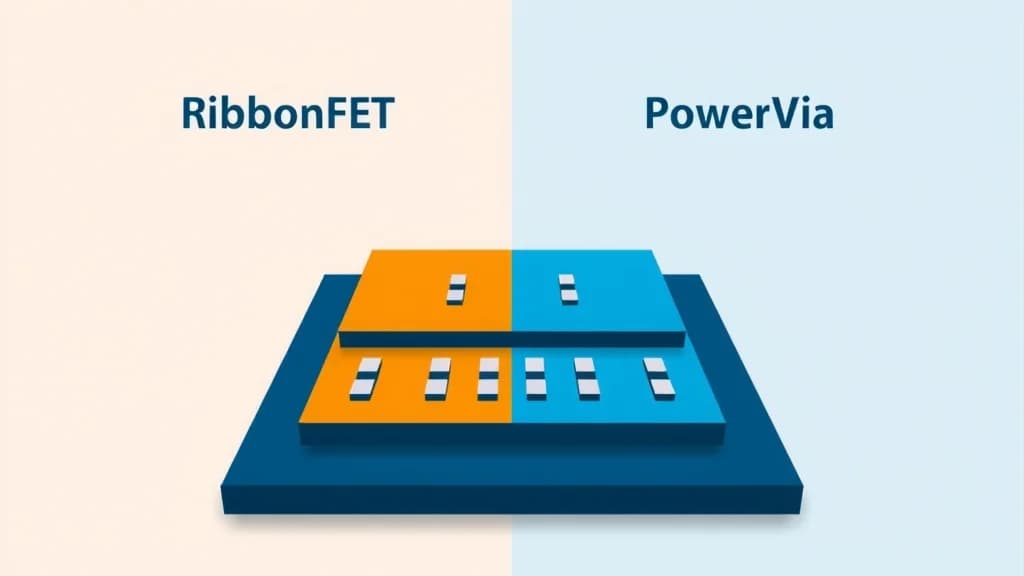
The implementation of PowerVia technology, which involves power delivery through the back side of the silicon wafer, was supposed to provide significant space savings for signal connections. Nevertheless, in reality, by 2026, TSMC demonstrates a more mature ecosystem and predictability in mass production rollout. For the industry, this means that Intel is on the right track, but the technological gap accumulated over the past decade is being overcome with difficulty. The success of Panther Lake depends not only on the physical parameters of transistors but also on Intel's ability to integrate these innovations into commercial products without sacrificing yield. The market expects that future generations of chips will show whether Intel can transform an engineering breakthrough into sustainable commercial leadership, or remain a follower for many years to come. Importantly, the presence of new transistors alone does not guarantee dominance; total cost of ownership and customer availability become critical factors. Intel has managed to confirm the viability of its concepts, but TSMC continues to dictate the terms of the semiconductor arms race, maintaining leadership in the most advanced segments of the artificial intelligence and high-performance computing markets.