
Automated News demo

Automated news feed

Quantum Leap in Energy: From Theory to Infrastructure

August 02, 2026

Quantum Leap in Energy: From Theory to Infrastructure

The launch of an experimental substation in Hefei marks a transition from theoretical research to the practical integration of quantum technologies into critical infrastructure. Unlike traditional approaches, where diagnostics are limited to macroscopic parameters, the new architecture employs quantum sensors to monitor equipment status at a fundamental level. This enables the identification of microcracks and insulation degradation before they trigger cascading failures.

Read full article →

Judicial Barrier to Digital Protectionism: Anthropic's Victory Over the Pentagon

August 01, 2026

Judicial Barrier to Digital Protectionism: Anthropic's Victory Over the Pentagon

The federal court ruling issued in late July 2026 has established a significant precedent for interactions between the public sector and private artificial intelligence developers. The Trump administration's attempt to classify Anthropic's technologies as a critical risk to supply chains and ban their use in government agencies failed to gain judicial support. The judge noted the absence of sufficient evidence confirming the justification for such strict restrictions, effectively blocking administrative pressure without a factual basis.

Read full article →
Kioxia's 3D NAND Breakthrough: Analysis of the Transition to 230 Layers

August 01, 2026

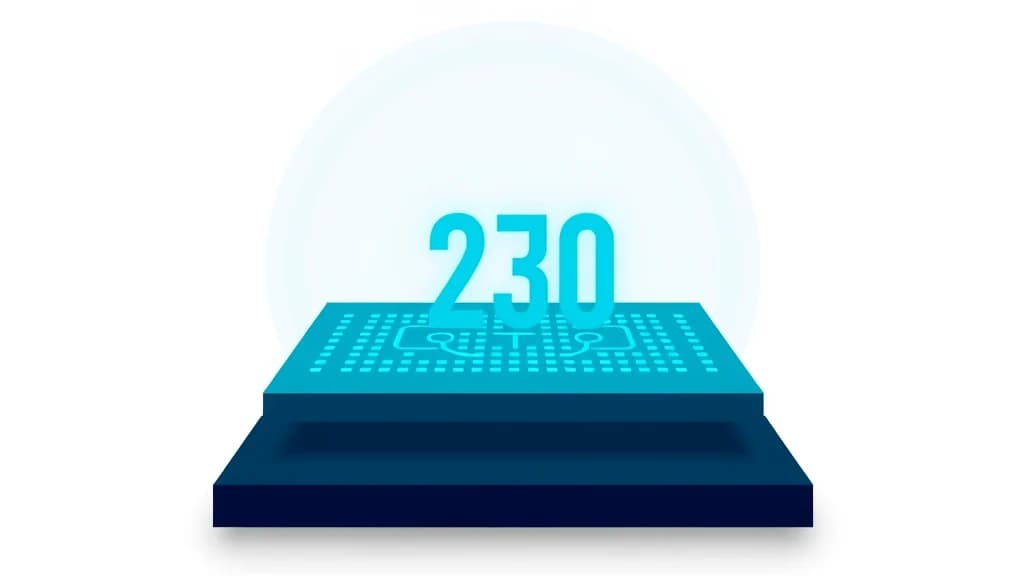
Kioxia's 3D NAND Breakthrough: Analysis of the Transition to 230 Layers

In July 2026, the semiconductor memory industry marks a critical milestone: Kioxia has begun test shipments of ninth-generation BiCS FLASH chips. The transition to a 230-layer architecture combined with TLC (Triple-Level Cell) technology demonstrates that the industry continues to overcome physical scaling barriers in 3D NAND, despite growing lithography complexity. This move goes beyond a simple specification update; it aims to fundamentally reduce the cost per gigabyte of storage, which remains the primary profitability driver for cloud data center operators.

Read full article →
Nvidia Driver Update as a Marker of Gaming Evolution in 2026

July 29, 2026

Nvidia Driver Update as a Marker of Gaming Evolution in 2026

The release of GeForce Game Ready driver 610.88 in July 2026 demonstrates a steady development trajectory of computer graphics, where artificial intelligence technologies and ray tracing have ceased to be options, becoming an industry standard. Integration of support for such large-scale projects as Halo: Campaign Evolved and Gears of War: E-Day multiplayer at the system software level indicates deep synchronization between video card manufacturers and AAA game developers. This allows optimizing rendering at the hardware level, ensuring stable frame rates even under high scene complexity conditions.

Read full article →
Samsung's Strategic Shift: Silicon-Carbon Batteries as New Mobile Energy Standard

July 28, 2026

Samsung's Strategic Shift: Silicon-Carbon Batteries as New Mobile Energy Standard

The introduction of silicon-carbon anodes in the Galaxy Z flagship lineup marks a critical bifurcation point in mobile energy. Unlike the aggressive race for capacity, where many competitors target figures exceeding 10,000 mAh, Samsung demonstrates a strategic shift in priorities: energy density now primarily serves device miniaturization rather than merely extending autonomy. Increasing the Galaxy Z Fold 8 Ultra's capacity from 4400 to 5000 mAh while simultaneously reducing chassis thickness proves the high efficiency of the new anode chemistry compared to traditional graphite.

Read full article →
eSIM Vulnerability: New Attack Vector on Mobile Communications

July 27, 2026

eSIM Vulnerability: New Attack Vector on Mobile Communications

The incident involving Beeline customers demonstrates a critical vulnerability arising from the large-scale transition to eSIM technology. Attackers are exploiting not classic password cracking, but social engineering at the operating system interface level. System notifications are perceived by users as legitimate operator actions, removing the psychological barrier to confirmation. This fundamentally changes the cybersecurity paradigm: protection shifts from network perimeter to trust in the user-device interaction interface.

Read full article →
Jensen Huang vs. Apocalypse: Pragmatism vs. Fear in AI

July 26, 2026

Jensen Huang vs. Apocalypse: Pragmatism vs. Fear in AI

Jensen Huang's position reflects a strategic shift in the narrative surrounding artificial intelligence. While part of the scientific community and safety experts focus on existential threats, the semiconductor industry leader is betting on pragmatism and commercialization. Nvidia's criticism of apocalyptic rhetoric is not merely a defense of product reputation but signals AI's transition from experimental research to mass deployment in critical infrastructure.

Read full article →
Russian Engineers Develop Hybrid Supercomputer for Banking Sector

July 26, 2026

Russian Engineers Develop Hybrid Supercomputer for Banking Sector

A project creating a domestic supercomputer complex for one of Russia's largest banks demonstrates significant progress in import substitution for high-performance computing. Collaboration between AMD Technologies and E-Flops resulted in a unique "dual-circuit" architecture that effectively separates data streams for scientific calculations and artificial intelligence tasks.

Read full article →
Samsung's Technological Compromise: Capacity at the Expense of Durability

July 25, 2026

Samsung's Technological Compromise: Capacity at the Expense of Durability

Samsung's strategic shift in the foldable device segment demonstrates a priority of marketing specifications over long-term reliability. The transition to silicon-carbon battery chemistry in the new Galaxy Z Fold series aims to overcome physical limitations of traditional lithium-ion cells. However, analysis of specifications reveals a significant regression in operational performance: maintaining 80% capacity is now guaranteed only after 1200 cycles, which is 40% fewer than previous generations of flagship devices.

Read full article →
Interface Evolution: The Smartphone as a Window into Data

July 24, 2026

Interface Evolution: The Smartphone as a Window into Data

By the mid-2020s, mobile devices have finally ceased to be simply communication tools. The publication of an AI applications overview for Android indicates the full maturity of computer vision technologies. The smartphone is transforming into an active sensor capable of interpreting the physical world, not just recording its image. This represents a fundamental shift from passive event registration to active real-time analysis, radically changing the user experience.

Read full article →
Samsung Launches Android XR Era with Smart Glasses

July 23, 2026

Samsung Launches Android XR Era with Smart Glasses

The July 2026 unveiling of Samsung Smart Glasses marks a critical turning point in the evolution of wearable computing. The Korean giant has abandoned the concept of bulky virtual reality headsets in favor of autonomous glasses, signaling the maturity of the Android XR market. Integrating the Android XR platform powered by Snapdragon processors allows the glasses to function not merely as a display, but as a full-fledged computing node capable of running native applications and providing spatial audio without relying on a smartphone.

Read full article →
Neural Rendering: Nvidia's Strategic Pivot in 2026

July 22, 2026

Neural Rendering: Nvidia's Strategic Pivot in 2026

In 2026, the computer graphics industry stands on the threshold of a fundamental rethinking of visualization approaches. The DLSS 5 demonstration at SIGGRAPH indicates that Nvidia is overcoming the skepticism phase and moving toward practical implementation of generative rendering. The key challenge here lies not in performance, but in user trust toward algorithms capable of generating geometry and textures in real-time. The initial negative community reaction reflected fear of the "black box," where rendering results become unpredictable.

Read full article →
News

July 21, 2026

News

**HEADLINE: Vertical Breakthrough in Microelectronics: Analysis of CFET Technology**

Read full article →
Technology Democratization: How TECNO Is Reshaping the Budget Segment in 2026

July 20, 2026

Technology Democratization: How TECNO Is Reshaping the Budget Segment in 2026

The launch of the TECNO SPARK 50 smartphone in July 2026 demonstrates a radical paradigm shift in the mobile device market. Brands traditionally focused on emerging markets are increasingly penetrating the economy segment, offering functionality that just a couple of years ago was the prerogative of flagships. A price around 12,000 rubles for a device combining current trends questions traditional segmentation by specifications. TECNO employs an aggressive technology democratization strategy, aiming to saturate the budget device with the maximum number of "features" — from advanced cameras to AI functions.

Read full article →
T-Search: Breakthrough in Agent Search and Data Sovereignty

July 19, 2026

T-Search: Breakthrough in Agent Search and Data Sovereignty

In July 2026, the artificial intelligence market received a significant tool from "T-Technologies" — the T-Search model. This is not just another search engine, but a Reasoning Engine class solution capable of multi-step reasoning in Russian. Unlike classic vector databases, agent search allows the system to break down a user's complex query into subtasks, executing them sequentially to obtain a precise answer. This is critically important for corporate systems where the answer is often hidden in the intersection of several documents or requires synthesizing heterogeneous data.

Read full article →
Generative AI in Education: From Exception to Norm

July 18, 2026

Generative AI in Education: From Exception to Norm

By July 2026, the use of generative neural networks in Russian higher education has crossed the threshold of a marginal phenomenon to become a systemic reality. Statistics recorded in the second quarter of this year demonstrate that one-third of all checked student papers contain signs of algorithmic participation. This indicates not so much a crisis of academic integrity as a fundamental shift in approaches to content generation. Technologies have ceased to be an external tool and have integrated into the learning process itself, changing the nature of student assignments.

Read full article →